


OSCAR WILDE AND PARIS
My book "Oscar Wilde & Paris" is not only about Oscar in Paris but about the relationship between the French capital and the writer. It is a fascinating journey through Paris with Oscar at the heart of that journey. From his first visit as a young poet, then as the most celebrated English writer and finally as a convict in exile, his position within Parisian society evolved dramatically. The reader follows Wilde during all his sojourns and witnesses his meetings with all the artists, famous or not, the Tout-Paris, Hugo, Mallarmé, Gide, Rollinat, Schwob, Jacques-Émile Blanche, Verlaine, Sarah Bernhardt and many others, either in the most fabulous restaurants and cafés or in sordid paces in Montmartre faithfully depicted throughout the book.


In order to comprehend the impact that Paris had on him and his own influence on French artists, I set his various stays within the political, social and literary context, thus explaining the emergence of various political and literary movements, such as the Symbolists, the Decadents, the Anarchists, the Bohemians and Wilde's position among them. If Wilde inspired many artists he also was greatly influenced by Paris. It is no coincidence that on his honeymoon he discovered À Rebours, a major influence on The Picture of Dorian Gray written in England. The genesis of Salomé written in Paris in French while surrounding himself with Symbolists is a remarkable one and was also influenced by À Rebours.
Although Wilde visited Paris during the most fascinating period, it became a different matter in the early 1890’s as Oscar’s world was beginning to take a turn for the worst. Not a week went by without a bomb exploding at what Anarchists consider to be the symbols of the rich and ruling classes. Symbolism meant not only free verse but also radical political sentiments, and the government deployed a gigantic operation among the Anarchists and their intellectual supporters. On his release, the “Affaire Dreyfus” made life very difficult for foreigners and for Wilde himself a foreigner and a convict. To Wilde, who never showed any inclination towards any political or religious ideology the conversations among French intellectuals seemed quite tedious and didn’t help him to regain some creative spirit. At times, misunderstandings between Oscar and his Parisian counterparts created tension. His constant refusal to complain about his treatment by the British authorities irritated quite a few in Paris who thought they had done everything they could to help him released earlier, although in vain..
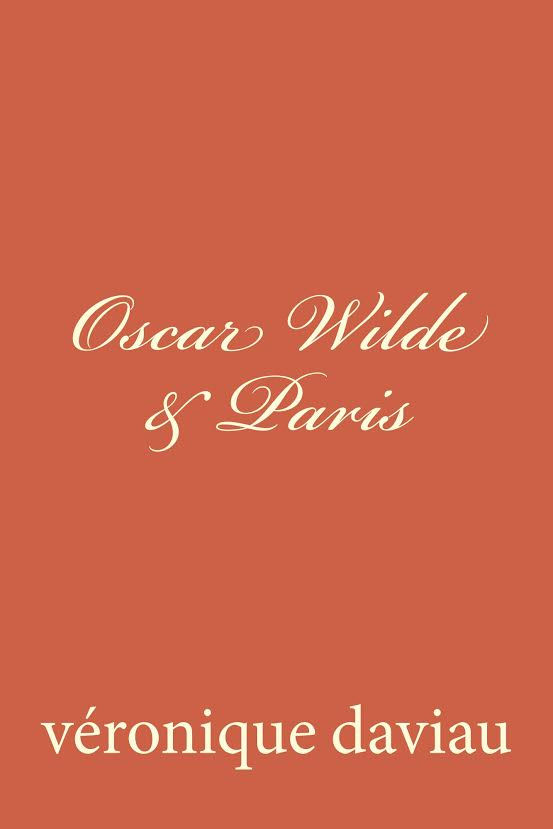
It is very much a book about the dual personality in Oscar Wilde, as perceived in the French capital; Oscar the dilettante, Paterian, witty and carefree spirit and Wilde the Oxonian, and classicist genius. Both of them in turn fascinated, inspired, mesmerized but also intrigued, irritated and shocked those he met.
I wrote two versions of the book, a French and an English one, as it seemed an obvious thing to do in view of the nature of the biography but also as someone who was very much inspired by Wide first as a student in France and later as a Londoner for the past thirty years. To have chosen one language over the other wold have gone against the very subject of this book.
Click here to purchase 'Oscar Wilde & Paris in English, and click here for the French version. Also, you can download it on your Kindle.
Are you an eager beaver? Take your pick from our Wilde selection eBooks on Culturethèque:




Comments