


French women also get their books translated...
This month is is the Women in Translation Month, during which publishers and bookshops draw attention to continuing gender imbalances in translated publishing. The London Review of Books bookshop, as well as the magazine Bookseller, have both had things to say on the subject; and the LRB more specifically put together a shortlist of fiction written by women. To our great surprise, neither the LRB nor Bookseller mentioned even a single book written by a French female author! There’s plenty of talented French women who’ve recently had their books translated and published in the UK; in fact we’ve already talked about some of them on this blog. So have a look at this far-from-exhaustive list we’ve put together:
Virginie Despentes:

King Kong Theory, translated by Stephanie Benson (Feminist Press; Serpent's Tail in ebook)
"King Kong Theory is Despentes' candid account of how she became notorious: reviled and admired in equal measure for her rape-revenge novel turned film, Baise-Moi, she is the poster girl for modern female rebellion. Powerful, provocative and personal, King Kong Theory describes the ways her ideas have been shaped by her experiences of rape, prostitution and working in the porn industry. Feminist theory sheds its fusty image and takes on a punk mentality as Despentes claims that sisterhood explodes our belief in feminine perfection and creates a space for all those who can't or won't obey the rules. Woolf and de Beauvoir are revived and updated by the loudest, most fiercely unapologetic misfit writing in France today."

Apocalypse Baby, translated by Sîan Reynolds (Feminist Press; Serpent's Tail in ebook)
"Valentine, the troubled daughter of a well-off but dysfunctional Parisian family, vanishes on her way to school. Inexperienced private detective Lucie Toledo is hired to find the missing teenager, and enlists the help of a formidable agent with a past, known to her friends as the Hyena. Their quest, from Paris to Barcelona and back, uncovers a rich cast of characters whose paths have crossed Valentine's, leading to an alarming climax. Part political thriller, part road-movie, part romance, the latest novel by subversive writer and film-maker Virginie Despentes won the Prix Renaudot 2010 for the pitiless gaze it directs at society in the age of the internet."
Dominique Eddé:
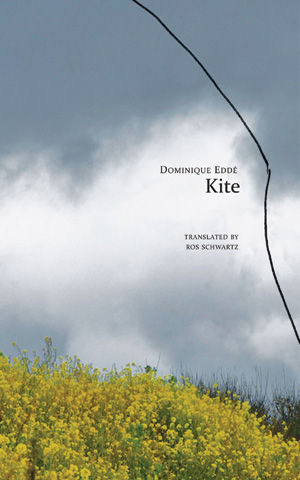
Kite, translated by Ros Schwartz (Seagull Books)
"Rich and multilayered, with elements of both memoir and fiction, Dominique Eddé’s Kite defies categorization. Beginning in the 1960s and ending in the late ’80s, it is at once a narrative of a passionate, and ultimately tragic, relationship between Mali and Farid and the simultaneous decline of Egyptian-Lebanese society. Densely populated with myriad characters, Kite chronicles the casualties of social conventions, religious divisions and cultural clichés.
The differences between East and West are central to the tension of Eddé’s book and share the responsibility for an unavoidable impasse between the lovers. This fragmented narrative—written in several voices that reflect the fragmented lives of those caught up in the madness of war—calls into question an entire way of living and thinking."

The Crime of Jean Genet, translated by Ros Schwartz (Seagull Books)
"Dominique Eddé met novelist and playwright Jean Genet in the 1970s. And she never forgot him. “His presence,” she writes, “gave me the sensation of icy fire. Like his words, his gestures were full, calculated and precise. . . . Genet’s movements mimicked the movement of time, accumulating rather than passing.”
This book is Eddé’s account of that meeting and its ripples through her years of engaging with Genet’s life and work. Rooted in personal reminiscences, it is nonetheless much broader, offering a subtle analysis of Genet’s work and teasing out largely unconsidered themes, like the absence of the father, which becomes a metaphor for Genet’s perpetual attack on the law. Tying Genet to Dostoevsky through their shared fascination with crime, Eddé helps us more clearly understand Genet’s relationship to France and Palestine, Judaism, Christianity, Islam, the theater, and even death. A powerful personal account of the influence of one writer on another, The Crime of Jean Genet is also one of the most penetrating explorations yet of Genet’s work and achievement."
Maylis de Kerangal:

Birth of a Bridge, translated by Jessica Moore (MacLehose Press)
"Coca, Southern California. A small town on a wild river, at the margins of the red-rocked desert and the forest where the last of the state's Native Americans still make their home.When Boa, the charismatic new mayor, decides to put Coca on the map, he plans a monumental new project: a six-lane bridge, two hundred metres high, designed and destined to catapult the city into the third millennium. Workers from across the globe flock to California: to earn a living, to escape their pasts, to bear witness to man's mastery of nature. But the project's majestic scope has no regard for the legacy of this ancient land, and within this monochrome Babel festers a very human cocktail of fears and passions.
At once timeless and yet exquisitely of its moment, Maylis de Kerangal's multi-award-winning novel follows its broad cast of construction workers and architects, diggers and dreamers, as they navigate both the intricacies of their project and the depths of the human heart."

Mend the Living, translated by Jessica Moore (MacLehose Press)
"In the depths of a winter's night, the heart of Simon Limbeau is resting, readying itself for the day to come. In a few hours' time, just before six, his alarm will go off and he will venture into the freezing dawn, drive down to the beach, and go surfing with his friends. A trip he has made a hundred times and yet, today, the heart of Simon Limbeau will encounter a very different course.
But for now, the black-box of his body is free to leap, swell, melt and sink, just as it has throughout the years of Simon's young life.5.50 a.m. This is his heart. And here is its story."
Marie Ndiaye:

Three Strong Women, translated by John Fletcher (MacLehose Press)
"Three women who almost had it all...Norah thinks she has made it when she qualifies as a lawyer in Paris; Fanta works her way into a prestigious teaching job in her home city; Khady runs a cafe with her loving husband - now all she wants is a child. But family ties, broken or reasserted, will force each woman to face a journey from France to Africa or from Africa to France that will take the future out of their hands and change their lives forever.
Domineering fathers, weak lovers, the perilous road of the refugee - they will need all their courage and inner strength if they are to overcome."
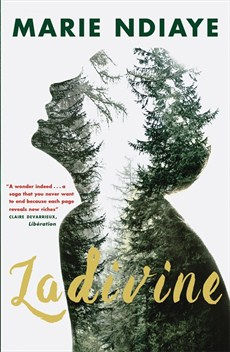
Ladivine, translated by John Stump (MacLehose Press)
"In time, her lies turn against her. Richard leaves Clarisse, frustrated by the unbridgeable, indecipherable gulf between them. Clarisse is devastated, but finds solace in a new man, Freddy Moliger, who is let into the secret about her mother, and is even introduced to her. But Ladivine, her daughter, who is now married herself, cannot shake a bad feeling about her mother's new lover, convinced that he can bring only chaos and pain into her life. When she is proved right, in the most tragic circumstances, the only comfort the family can turn to requires a leap of faith beyond any they could have imagined.
Centred around three generations of women, whose seemingly cursed lineage is defined by the weight of origins, the pain of alienation and the legacy of shame, Ladivine is a beguiling story of secrets, lies, guilt and forgiveness by one of Europe's most unique literary voices."
Marie-Sabine Roger:

Soft in the Head, translated by Frank Wynne (Pushkin Press)
"His mother called him a worthless halfwit while his fellow drunks at the local bar ensure he's the butt of all their jokes. He spends his days whittling wood, counting pigeons and adding his own name to the bottom of the list on the town war memorial. So how could Germain possibly understand what a casual encounter on a park bench with eighty-five year old Margueritte could mean? In this touchingly comic tale of an unusual friendship, that first conversation opens a door into a world Germain could never have imagined-the world of books and ideas-and gives both him and Margueritte a chance at a happiness they thought had passed them by."
Marie Sizun:

Her Father's Daughter, translated by Adriana Hunter (Peirene Press)
"A taut and subtle family drama from France.A little girl lives happily with her mother in war-torn Paris. She has never met her father, a prisoner of war in Germany. But then he returns and her mother switches her devotion to her husband. The girl realizes that she must win over her father to recover her position in the family. She confides a secret that will change their lives."
"This is a poetic story about a girl’s love for her father. Told from the girl’s perspective, but with the clarity of an adult’s mind, we experience her desire to be noticed by the first man in her life. A rare examination of the bonds and boundaries between father and daughter."
Lydie Salvayre

Cry Mother Spain, translated by Ben Faccini (MacLehose Press)
"Aged fifteen, as Franco's forces begin their murderous purges and cities across Spain rise up against the old order, Montse has never heard the word fascista before. In any case, the villagers say facha (the ch is a real Spanish ch, by the way, with a real spit).Montse lives in a small village, high in the hills, where few people can read or write and fewer still ever leave. If everything goes according to her mother's plan, Montse will never leave either. She will become a good, humble maid for the local landowners, muchísimas gracias, with every Sunday off to dance the jota in the church square.
But Montse's world is changing. Her brother José has just returned from Lérida with a red and black scarf and a new, dangerous vocabulary and his words are beginning to open up new realms to his little sister. She might not understand half of what he says, but how can anyone become a maid in the Burgos family when their head is ringing with shouts of Revolución,Comunidad and Libertad?
The war, it seems, has arrived in the nick of time."

The Company of Ghosts, translated by Christopher Woodall (Dalkey Archive Press)
"When a process-server arrives at a housing project on the edge of Paris to draw up a routine inventory of goods in view of seizure, the reception he receives from distrainees Rose Mélie and her teenage daughter Louisiane is more than he has bargained for. Rose, forever unhinged by the trauma of a childhood spent under Nazi occupation, mistakes him for a collaborationist thug and assails him with her alternately tragic and hilarious memories of Vichy France. Louisiane, for her part, treats the process-server to an exaggerated display of courtesy laced with precocious classical erudition and a stream of late-pubescent revelations.
In a narrative that lurches giddily between 1942 and 1997, Lydie Salvayre picks at the sores of recent French history, impertinently exposing continuities of authoritarianism. In Some Useful Advice for Apprentice Process-Servers—a short piece also included in this book—the author grants the process-server a right of reply, which he uses to chilling effect."
Dominique Sylvain:

The Dark Angel, translated by Nick Caistor (MacLehose Press)
"On the one hand, there's Lola. A grumpy retired policewoman who cannot get by without her two best friends: red wine and jigsaw puzzles. On the other, there's Ingrid, an American in love with Paris. By day she gives the best massages in the city, and her long nights are wilder still...Their paths might not have crossed were it not for the murder of a young neighbour. Vanessa Ringer's body is found in the flat she shared with two schoolfriends, mutilated in the most cruel and unusual manner.
Suspicion falls on Maxime Duchamp, a charming restaurateur whose suave exterior hides a tragic past. Convinced of his innocence, Lola and Ingrid hit the streets to unmask the real killer. Meanwhile, lying low, the victim's spurned lover, a high-stakes thief with one last heist to go, is plotting his revenge. His inner demon, the Dark Angel, has foreshadowed all..."
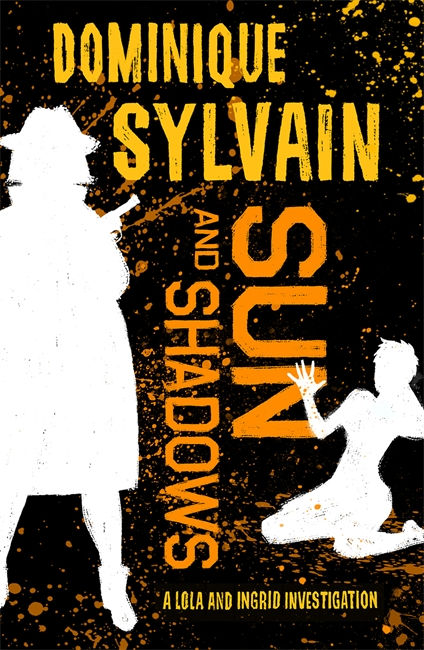
Sun and Shadows, translated by Nick Caistor (MacLehose Press)
"Lola Jost, once of the Paris Police, is busy fending off boredom with a jigsaw puzzle when Gendarme Capitaine Hardy knocks on her door. Arnaud Mars - a disgraced police divisionnaire on the run after a seismic defence contracts scandal - has been found dead in Abidjan in the Ivory Coast. The gun that killed him belongs to Commandant Sacha Duguin, a former colleague of Lola's.
Convinced of Duguin's innocence, Lola throws off her torpor. Together with her occasional partner in crime-fighting Ingrid Diesel - who she must first tempt back from Las Vegas - she embarks on a quest to clear her old friend's name. Faced by a shadowy adversary determined to keep its past crimes under wraps, Lola and Ingrid must travel as far as Abidjan and Hong Kong to uncover the truth behind their most dangerous case to date."
Déborah Lévy-Bertherat:

The Travels of Daniel Ascher, translated by Adriana Hunter (Other Press)
"Who is the real author of The Black Insignia? Is it H. R. Sanders, whose name is printed on the cover of every instalment of wildly successful young adult advemtire series? Or is it Daniel Roche, the enigmatic world traveler who disappears for months at a time? When Daniel's great-niece, Hélène, moves to Paris to study archeology, she does not expect to be searching for answers to these questions. As rumours circulate, however, that the tweny-fourth volume of The Black Insignia series will be the last, Hélène and her friend Guillaume, a devoted fan of her great-uncle's books, set out to discover more about the man whose life eludes her. In so doing, she uncovers an explosive secret dating back to the Occupation. In recounting the moment when one history began and another ended, The Travels of Daniel Ascher explores the true nature of fiction: is it a refuge, a lie, or a stand-in for mourning?"


Comments